
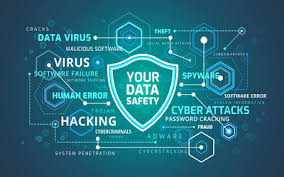
An attempt to breach a computer network or system by hackers, cybercriminals, or other adversaries online to steal, destroy, or disclose data is known as a cyberattack. Governments, companies, and individuals are susceptible to cyber intrusions.
When hackers attack businesses or other organizations, they aim to gain critical and sensitive corporate resources, such as payment information, customer details, and intellectual property (IP).
Cyber breaches are harmful in several ways. Offensive deployment may lead to data breaches, which may result in the loss or alteration of data. Organizations face financial losses, eroded consumer trust, and damage to their brand.
Major Cyber Threat Types
While there are severe ways for an invader to access an IT system, most offensives use similar methods. Some of the top typical categories of cyberattacks are listed below:
1. Malware
Unwanted software is installed on a system without consent. It can infect PCs through trustworthy websites, programs, or file attachments. This malicious software may enter a system by encrypting files, displaying advertisements, blocking access to data, and self-replicating.
It comes in assorted forms, including worms, trojans, spyware, adware, keyloggers, botnets, and ransomware. By exploiting an abnormality, malware assaults enter the network and introduce malicious code.
2. Phishing
In a deceptive cyberattack, phishing involves obtaining sensitive information through fraudulent websites or emails, such as account numbers, credit card amounts, and login credentials.
Targeted spearphishing occasionally sends bogus emails to certain people or businesses. Sometimes, the targets are affluent individuals who steal assets or confidential data. The goal is to compel humans to disclose personal data that will be used fraudulently.
3. Ransomware
Results from malicious data encrypting a victim’s information and blocking their access. This harmful software is typically used to extort money in exchange for the key to unlocking the encrypted files, folders, and machines belonging to the attacker.
Subsequently, the virulent code uses a system vulnerability to encrypt the data.
4. Password Attacks
These can range from simple passcode-guessing aggressions to more complex ones, including keylogging, where hackers follow the data you write to retrieve passwords.
The opponent can try every combination in the dictionary and eventually guess the PIN using automated password-guessing software.
5. DoS and DDoS Attacks
A lone attacker conducts denial-of-service (DoS) aggression. Nevertheless, many attacker-controlled workstations, often infected with malware, execute a distributed denial of service (DDoS) attack.
The main goal of these invasions is to interfere with the targeted system or service and prevent authorized users from accessing it. If a DoS or DDoS attack is successful, the platform can be exposed to other assaults.
6. Zero-Day Attacks
A zero-day exploit is a cyberattack when hackers use a security flaw discovered only in extensively used operating systems. This method allows offenders to target businesses that use software and exploit the vulnerability while it is still unfixed.
How Can Cyber Attacks Be Prevented?
To prevent cyberattacks, be aware of cyber risk tips:
- Malware: Use antimalware and spam protection software to avoid cyber threats, recognize phishing emails and websites, enforce stringent password requirements, update software, and limit access to systems and data.
- Phishing: Do not open emails from unknown senders. Instead, check the emails you receive closely for errors and major faults.
- Ransomware: Ensure your antimalware and antivirus programs are current to avoid ransomware. Never open attachments or click on links from unreliable or unknown sources.
- Password assaults: To stop password attacks, you need a robust password policy, penetration testing, and multi-factor authentication (MFA).
- DoS and DDoS: To stop DoS and DDoS assaults, a robust network design with firewalls, traffic filtering, rate limiters, and collaboration with ISPs is required.
- Attacks using a man-in-the-middle (MITM):A secure VPN service is crucial while connecting over public Wi-Fi to safeguard against Man-in-the-Middle (MITM) attacks. The excellent course of action is to use a secure tool service.
- Zero-day attack:While standard antivirus software may not completely prevent zero-day exploits, advanced antivirus software may offer some security against them.
Conclusion
In conclusion, even if these cyberattacks are becoming more sophisticated, understanding them is your best defence for your networks and systems. Use a safe VPN provider, like ExtreameVPN. A secure connection guarantees that your device and the tool server will always be connected over an encrypted connection.